All Plants Are Edible, Some Only Once
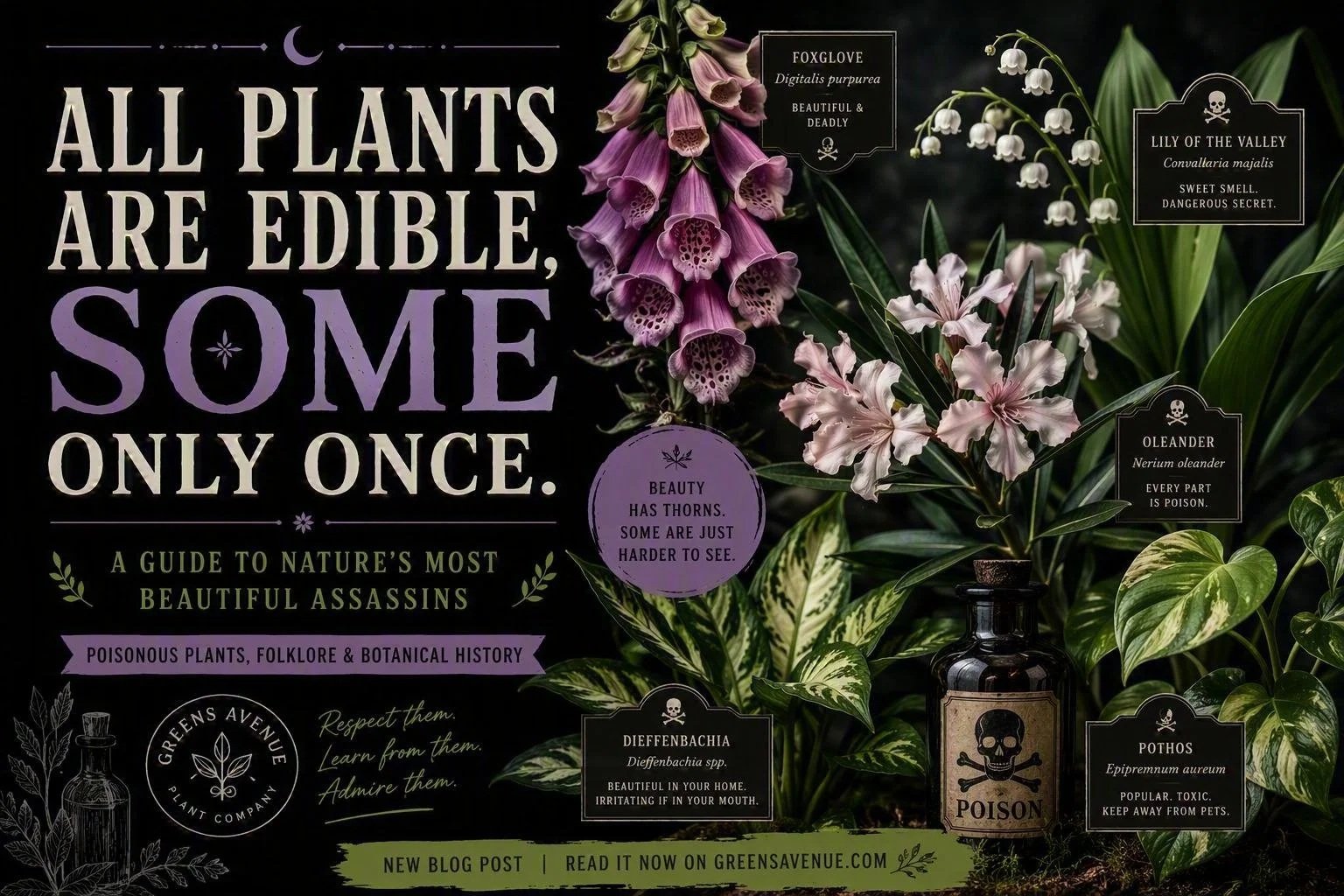
An introduction to some of nature's most beautiful assassins.
If you've spent any amount of time around plant people, you've probably heard the old joke:
"All plants are edible. Some plants are only edible once."
As it turns out, many of our favorite houseplants, garden flowers, and landscape plants are also mildly—or extremely—toxic. While plants may seem peaceful, they've spent millions of years evolving defenses against hungry animals, insects, fungi, and unfortunately, occasionally curious humans.
The fascinating truth is that some of the most beautiful plants in the world are also among the most dangerous. Fortunately, most of the plants you'll encounter aren't waiting to kill you, but understanding their history and toxicity can make you appreciate them even more.
Let's meet some of the botanical world's most notorious residents.
Foxglove: The Witch's Bell
With towering spikes of pink, purple, and white flowers, foxglove looks like it belongs in a fairy tale.
In many ways, it does.
Historically associated with folklore, witches, and woodland spirits, foxglove has been used medicinally for centuries. The plant contains compounds that ultimately led to the development of modern heart medications.
The catch?
The line between medicine and poison is incredibly thin.
Even small amounts of foxglove can cause serious heart complications if ingested. Despite its reputation, it remains one of the most breathtaking cottage garden flowers you can grow.
Beauty and danger often share the same garden bed.
Lily of the Valley: Tiny Flowers, Big Consequences
Lily of the Valley produces tiny white bell-shaped flowers and one of the most pleasant fragrances in the plant kingdom.
It also contains compounds capable of affecting the heart.
Many gardeners are surprised to learn that this sweet woodland favorite is considered toxic if consumed. Every part of the plant contains potentially harmful compounds.
The lesson?
Just because something smells like heaven doesn't mean it belongs in your tea.
Oleander: The Killer Shrub
Oleander may be one of the most dangerous ornamental plants commonly grown around homes and businesses. [dengarden.com], [farmersalmanac.com]
It's drought tolerant, covered in beautiful flowers, and widely planted throughout warmer climates.
Nearly every part of the plant contains toxic compounds capable of causing severe illness. [dengarden.com], [farmersalmanac.com]
Yet people continue growing it because, frankly, it's gorgeous.
Nature rarely asks us to choose between attractive and dangerous.
The Houseplants Hiding In Plain Sight
Many common houseplants contain compounds that can irritate the mouth, skin, or digestive system if chewed. Species such as Dieffenbachia, Pothos, Philodendron, ZZ Plants, and Peace Lilies are popular indoor plants despite their toxic properties. [bhg.com], [completega...dening.com], [livetoplant.com]
Don't panic.
For most adults, accidentally brushing against these plants isn't a major concern. Problems usually arise when pets or small children decide to investigate them with their mouths. Many cause irritation rather than life-threatening poisoning, but they're still worth respecting. [ourhouseplants.com], [livetoplant.com]
It's one of the reasons responsible plant ownership means knowing what you're bringing into your home.
The Ancient Relationship Between Humans and Poisonous Plants
Long before pharmacies existed, plants served as medicine, food, dyes, perfumes—and poisons.
Many of the compounds that make certain plants dangerous evolved as defense mechanisms against predators and disease. Scientists believe these toxins help plants avoid being eaten and protect themselves from damage. [ourhouseplants.com], [livetoplant.com]
Ironically, humans eventually learned how to harness many of these same chemicals for beneficial purposes.
Some of history's most important medicines have roots in plants that could be deadly when used incorrectly.
Nature has always been both healer and executioner.
Respect, Don't Fear
The goal isn't to be afraid of plants.
Quite the opposite.
Learning about toxic plants often deepens our appreciation for them. Understanding why a plant evolved certain traits or how it was used historically transforms it from decoration into a living story.
The Monstera in your living room. The foxglove in a cottage garden. The lily blooming on a woodland path.
Each carries millions of years of evolutionary history and a few secrets of its own.
Most plants are perfectly safe to enjoy when grown responsibly and handled with common sense.
But the next time someone asks whether a plant is edible, remember the oldest joke in horticulture:
All plants are edible. Some are only edible once.