New Plant CAre
Your New Plant Needs Time To Settle In
Thank you for bringing home a plant from Greens Avenue Plant Company.
Whether you're a seasoned collector or this is your very first houseplant, it is completely normal for your new plant to experience a brief adjustment period after moving into a new environment.
Plants adapt to changes in light, humidity, temperature, watering schedules, and even air circulation. Think of it as moving into a new home. Most plants need a few weeks to settle in and get comfortable.
The good news? A little patience goes a long way.
The First Two Weeks
During the first couple of weeks, try to avoid making major changes.
Do:
✅ Place your plant in the recommended lighting conditions. Visit our Lighting Recommendations Page.
✅ Let the plant adjust before repotting.
✅ Check soil moisture before watering.
✅ Monitor for signs of stress while giving the plant time to acclimate.
✅ Keep your plant away from heating vents, air conditioners, and drafty doors.
Avoid:
❌ Repotting immediately.
❌ Fertilizing right away.
❌ Moving the plant from room to room.
❌ Watering on a schedule without checking the soil first.
❌ Assuming every yellow leaf is an emergency.
What Is Plant Acclimation?
Plant acclimation is the process of adjusting to a new environment.
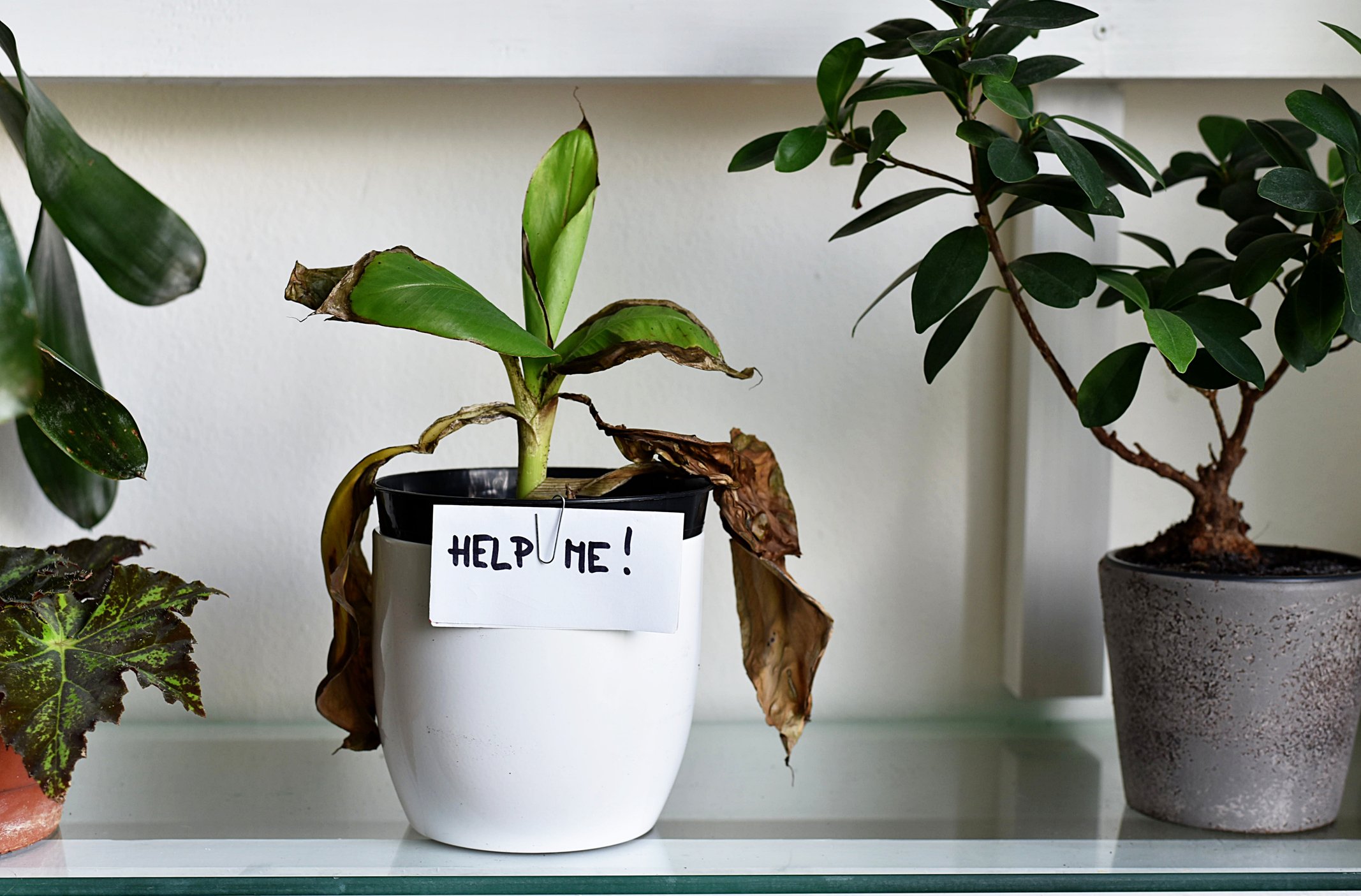
Even healthy plants can temporarily show signs of stress after being moved.
Common acclimation symptoms include:
A few yellow leaves
Minor leaf drop
Slower growth
Slight drooping
Changes in leaf orientation toward light
These signs are often temporary and do not necessarily mean your plant is unhealthy.
Watering 101
The most common houseplant issue is overwatering.
Instead of watering on a calendar, check the soil first.
General Rule:
If the soil still feels moist, wait.
If the soil feels dry several inches down, it may be time to water.
Remember that plants use less water during winter and more during active growing seasons.
When in doubt, underwatering is usually easier to correct than chronic overwatering.
Understanding Light
Many plant problems are actually lighting problems.
Bright Indirect Light
A bright room where the plant can see the sky but is protected from harsh afternoon sun.
Examples:
Near east-facing windows
A few feet back from south-facing windows
Bright rooms with filtered light
Medium Light
Rooms with natural light but farther away from windows.
Low Light
Areas with limited natural light. While some plants tolerate low light, very few truly thrive in dark spaces.
Humidity Matters More Than Many People Think
Many popular houseplants originate in tropical environments.
Signs your home may be too dry:
Crispy leaf edges
Brown tips
New leaves struggling to unfurl
Ways to increase humidity:
Group plants together
Use a humidifier
Place plants in naturally humid rooms when appropriate
Should I Repot My New Plant?
Usually, no.
Most plants are perfectly happy staying in their nursery pot for several months after purchase.
Repot when:
Roots are growing heavily from drainage holes
Water runs straight through the pot
Growth has noticeably slowed due to crowding
Waiting until the plant has acclimated reduces stress and helps ensure a successful transition.
Troubleshooting Guide
Yellow Leaves
Possible causes:
Natural aging
Recent relocation stress
Overwatering
Drooping Leaves
Possible causes:
Thirst
Environmental changes
Temperature fluctuations
Brown Tips
Possible causes:
Low humidity
Inconsistent watering
Mineral buildup from tap water
Leaf Drop
Possible causes:
Acclimation stress
Changes in lighting
Temperature shock
Every Home Is Different
Plant care is never one-size-fits-all.
A Monstera growing in a sunny apartment may need very different care than an identical Monstera growing in a shaded room just a few miles away.
Observation is one of the most valuable plant care skills you can develop. Take time to learn how your plant responds to your unique environment.
Need Help?
Questions about your plant?
We're happy to help.
Take a few photos and send us a message. Include:
The plant name (if known)
Photos of the entire plant
Photos of any concerning leaves
Information about lighting and watering
Text photos to 720-804-4469
We'll do our best to help you get your plant thriving!