The Garden Is Trying To Teach Us Something
There is a moment that happens when you spend enough time around plants. It usually arrives quietly. One day you find yourself standing in the garden, coffee in hand, looking at a plant that has somehow managed to thrive despite being ignored for weeks. Nearby, another plant that received all the attention, fertilizers, and fussing seems determined to struggle. It's frustrating at first, but eventually a different thought begins to emerge: maybe nature knows something we don't.
Modern gardening often encourages us to think of ourselves as managers. We water, fertilize, prune, spray, amend, and intervene. When something isn't working, our instinct is often to do more. More water. More fertilizer. More products. More effort. Yet if you walk through a healthy forest, prairie, or meadow, you won't find anyone managing the ecosystem. No one is hauling away fallen leaves. No one is aerating the soil. No one is applying fertilizer every other week. Despite that, these environments remain some of the most productive and resilient growing systems on Earth.
This observation is one of the ideas that drew me toward permaculture.
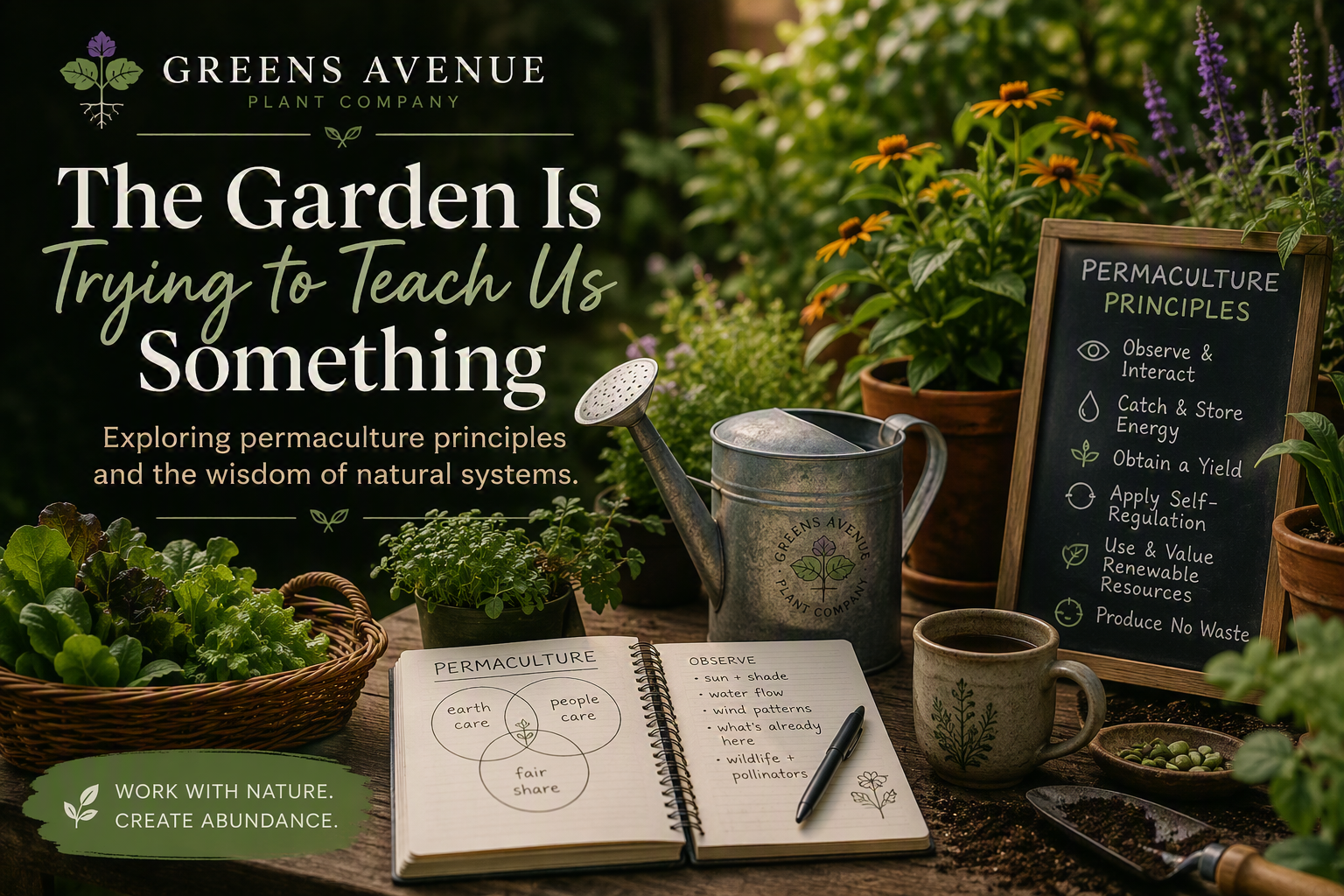
Permaculture is often described as a design philosophy, but at its heart it feels more like a different way of seeing the world. Rather than asking, "How can I make this grow?" permaculture asks, "What is already happening here, and how can I work with it?" It encourages observation before action and cooperation instead of control. The goal is not to force nature into submission but to understand the relationships that already exist and use them to create healthier, more resilient systems.
One of the most fascinating things about nature is that nothing is truly wasted. In a forest, fallen leaves become mulch. Mulch becomes soil. Soil feeds plants. Plants feed insects, birds, and wildlife. When those organisms die, they return nutrients back to the system. Everything has a purpose. Everything is connected.
Compare that to the way many of us garden. We bag up leaves and send them to the landfill. We remove plant debris that could have protected the soil. We buy fertilizers to replace nutrients that were discarded. We spend money solving problems that natural systems solved long ago.
The more I learn about ecological gardening and permaculture, the more I notice these patterns everywhere. A pile of leaves no longer looks like yard waste. It looks like future soil. A patch of clover isn't necessarily a weed. It might be protecting bare ground, attracting pollinators, and improving soil health. Even something as simple as observing where rainwater naturally flows across a property can reveal opportunities to conserve water instead of constantly fighting against drought.
Living in Colorado has made these lessons particularly relevant. Gardening here requires a certain level of humility. We deal with intense sunlight, dry conditions, unpredictable weather, heavy clay soils, and rapid temperature swings. It can feel like the environment is working against us. But permaculture encourages a different perspective. Instead of asking how to overcome these conditions, it asks how we can design with them.
Maybe a dry area isn't a problem to solve but an opportunity to grow plants adapted to drought. Maybe a slope isn't an inconvenience but a place where water can be slowed, captured, and used more effectively. Maybe the solution isn't adding more inputs but paying closer attention to what the landscape is already communicating.
What surprises many people is that permaculture isn't reserved for farms or large rural properties. You don't need acreage to apply these ideas. You can practice permaculture from an apartment balcony, a small suburban yard, or even inside your home.
Houseplants offer a perfect example of this. Every indoor plant exists within a tiny ecosystem. Light, humidity, soil composition, watering habits, airflow, and temperature all interact with one another. Success often depends less on strict schedules and more on understanding relationships. The healthiest houseplant owners are often not the people with the most complicated routines. They're the people who spend time observing. They notice when leaves begin to droop. They learn how sunlight moves through their home during different seasons. They understand that a plant growing naturally and steadily is usually healthier than one being constantly manipulated.
That idea of observation may be the most valuable lesson nature has to offer.
In a culture that rewards speed and immediate results, observation feels surprisingly difficult. We want answers, schedules, and quick fixes. But natural systems don't operate on our timelines. Soil takes time to build. Trees take time to mature. Pollinator populations take time to establish. Healthy ecosystems develop through countless interactions happening over months, years, and decades.
A gardener who spends time simply watching often learns more than a gardener who immediately reaches for a solution.
Watch where water pools after a storm. Notice which plants thrive with little intervention. Observe where butterflies spend their time. Pay attention to the areas of your garden that seem to flourish naturally. Nature is constantly offering information. We just have to slow down enough to notice it.
At Greens Avenue, I've always believed plants can teach us something if we're willing to listen. What started as a love for houseplants has gradually expanded into a fascination with ecology, food systems, soil health, beneficial insects, and the interconnected relationships that allow entire ecosystems to function. The more I learn, the more I realize how much there is to discover.
Over the coming months, you'll likely see more content exploring topics like regenerative gardening, pollinator habitats, edible landscapes, companion planting, soil biology, water conservation, and practical ways to work with nature rather than against it. These concepts aren't about perfection. They're about building a deeper understanding of how living systems function and finding ways to bring those lessons into our gardens, homes, and communities.
Because ultimately, that's what permaculture is teaching me.
The garden is not something separate from nature. It is nature.
And every season, every plant, every insect, and every handful of soil has a story to tell.
Sometimes the most productive thing we can do isn't work harder.
Sometimes it's simply to pay attention.
Greens Avenue Plant Company believes gardening should be both beautiful and thoughtful. Whether you're growing houseplants on a windowsill, harvesting herbs from a patio container, or dreaming about a backyard food forest, every plant is an opportunity to learn a little more about the natural world around us. 🌿